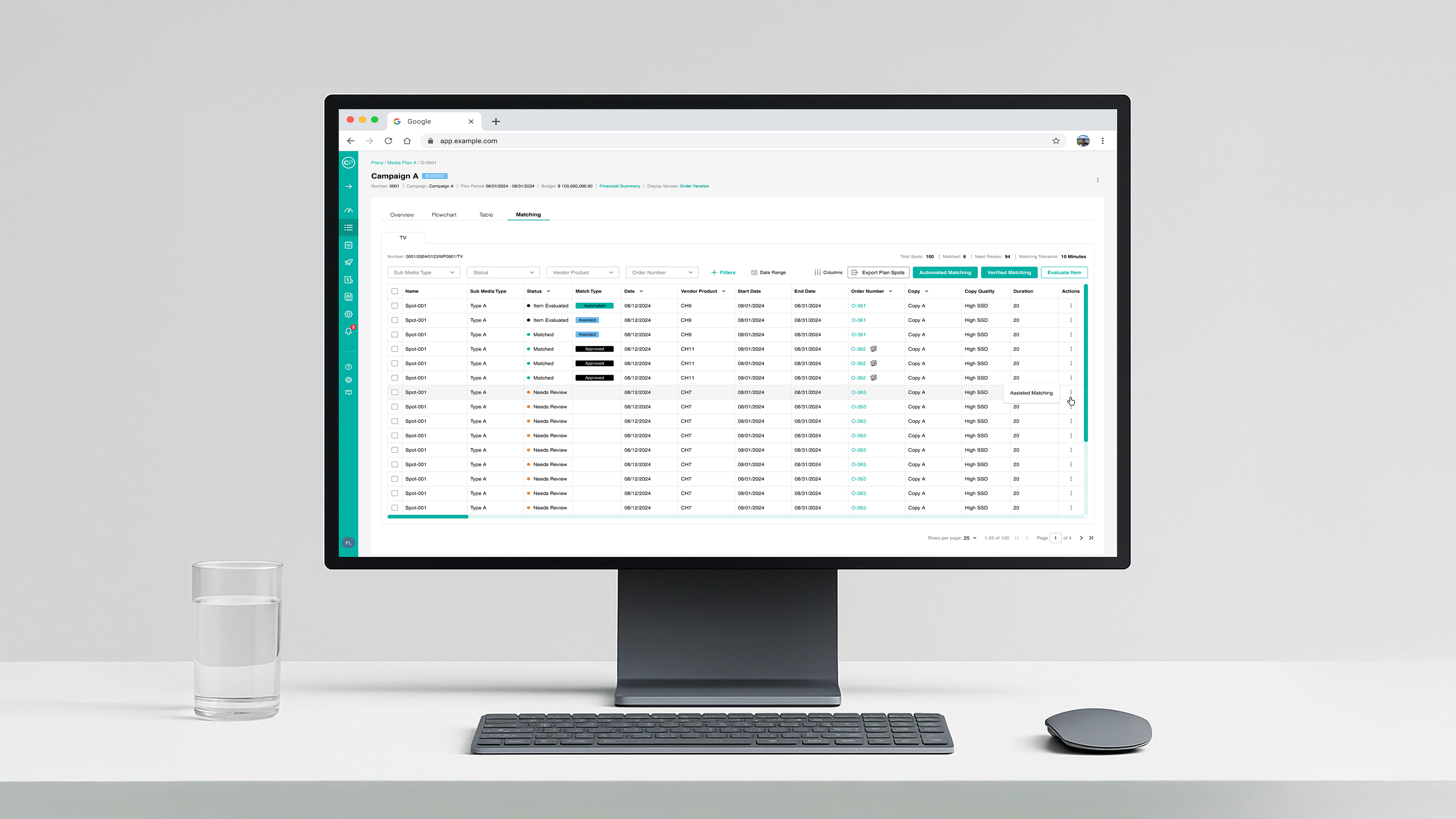
At a glance
Evolving an established product foundation for greater complexity
The project: An acquired enterprise platform was being adapted for an initial market context, with a longer-term direction toward broader expansion. Existing workflows, interaction patterns and the Design System needed to evolve as operational requirements became more demanding.
My contribution: I audited the existing experience, improved workflows and interfaces, addressed usability shortcomings, and designed additional capabilities. I also managed and expanded the Design System to support new states, use cases and product requirements.
The outcome: Existing workflows were refined, new capabilities were introduced, and the Design System was extended to support more complex interactions and operational requirements. The work moved incrementally into the product through its development cycle.
The challenge
An established foundation that needed to scale
The product already had an established foundation when I joined: screens, flows and an initial Style Guide / Design System inherited from the project’s original UX Designer.
The immediate challenge was to adapt that inherited foundation for an initial market context while keeping the experience flexible enough to accommodate future variation.
Existing interaction patterns did not always reflect users’ natural mental models. At the same time, the product contained increasingly complex workflows, dense data interfaces and multiple interaction states.
Users needed to understand large quantities of information, relationships between different areas of the product, available actions and changes occurring within the system.
The challenge was therefore not simply to redesign screens.
It was to establish a more coherent and adaptable UX foundation while continuously addressing product gaps and new operational requirements.
Extending the UX foundation, not replacing it
I worked as part of a cross-functional team, collaborating closely with both the delivery team and client-side stakeholders.
My responsibilities spanned:
Process
Auditing, designing and refining with the product team
The design process combined continuous UX audit, feature design and implementation refinement rather than operating as a separate phase.
I continuously audited existing screens and flows while reviewing newly required workflows with stakeholders.
These working sessions helped identify gaps, edge cases, dependencies, permission-related conditions, opportunities for improvement and areas where existing interactions could be simplified.
I translated these findings into flows, interactions and interface designs, iterating with stakeholders until the solution was approved. Approved designs then moved into development and continued to be refined throughout implementation.
Capability evolution
Extending connected workflows and operational capabilities
The evolving roadmap introduced requirements across several connected parts of the platform. These were not isolated interface additions: each brought operational rules, dependencies and exceptions that the experience needed to make understandable.
Design system
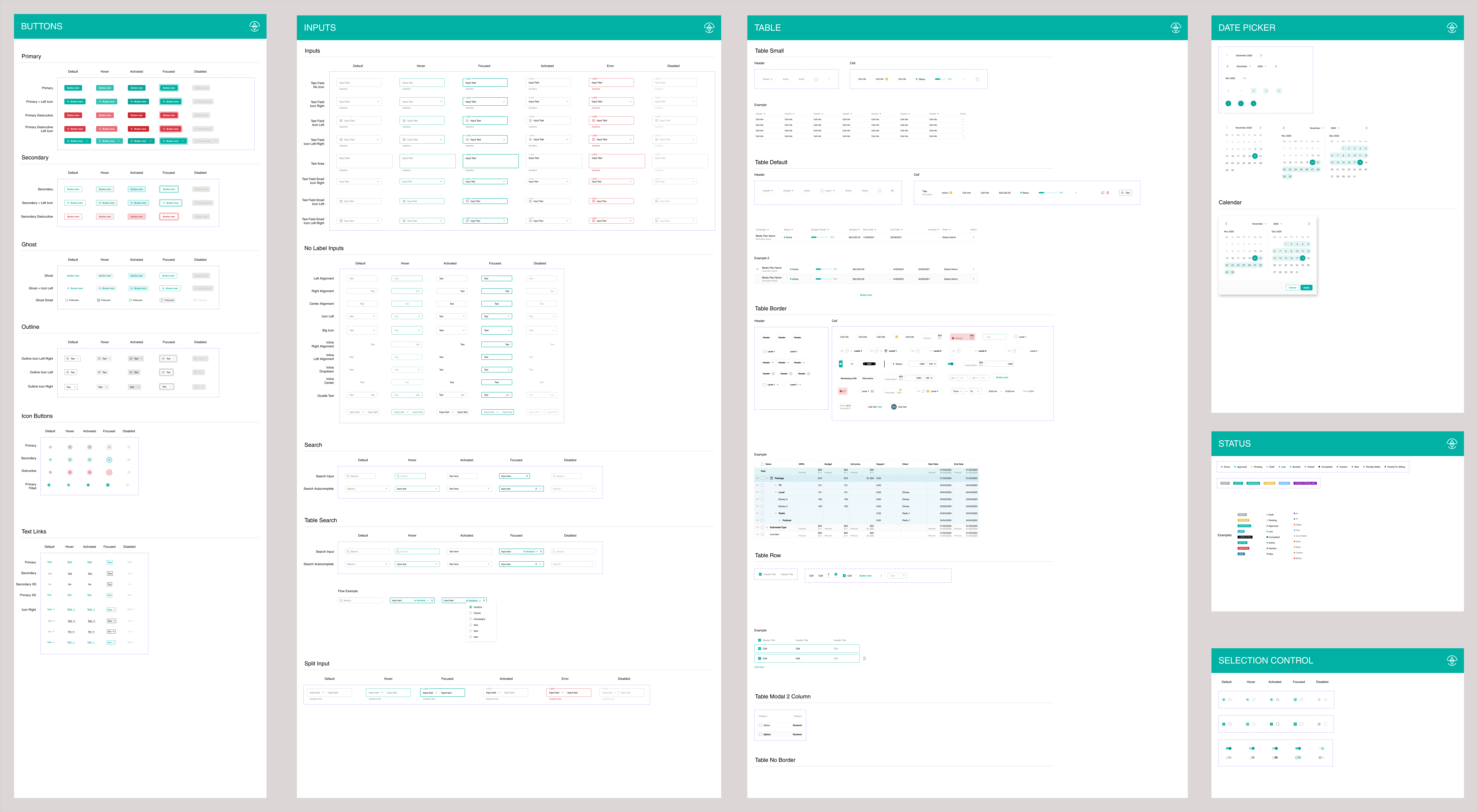
Evolving the Design System
Rather than introducing a completely new visual language, I built upon the existing Style Guide / Design System inherited with the product. As new workflows and requirements emerged, I managed and expanded its components and patterns to accommodate new states, interactions and use cases while maintaining consistency across the platform.
The Design System therefore became more than a collection of UI components. It provided a common foundation for expressing interaction states and behaviors across different areas of the product.
System behavior
Making system behavior visible and actionable
One of the recurring challenges was communicating what the system was doing — and what users could do next.
The same information could appear in different contexts, with changes sometimes initiated by users and sometimes generated by the system.
I worked on making these relationships more explicit through clearer visual states, interaction patterns, action affordances, permissions and system feedback.
The objective was to strengthen the correspondence between the interface and the user’s mental model, helping users understand both the current situation and the actions available to them.
Dense data
Making dense enterprise data usable
Many of the platform’s workflows relied on highly structured, data-dense interfaces.
Rather than treating these simply as table-design problems, I considered the interaction model around the information:
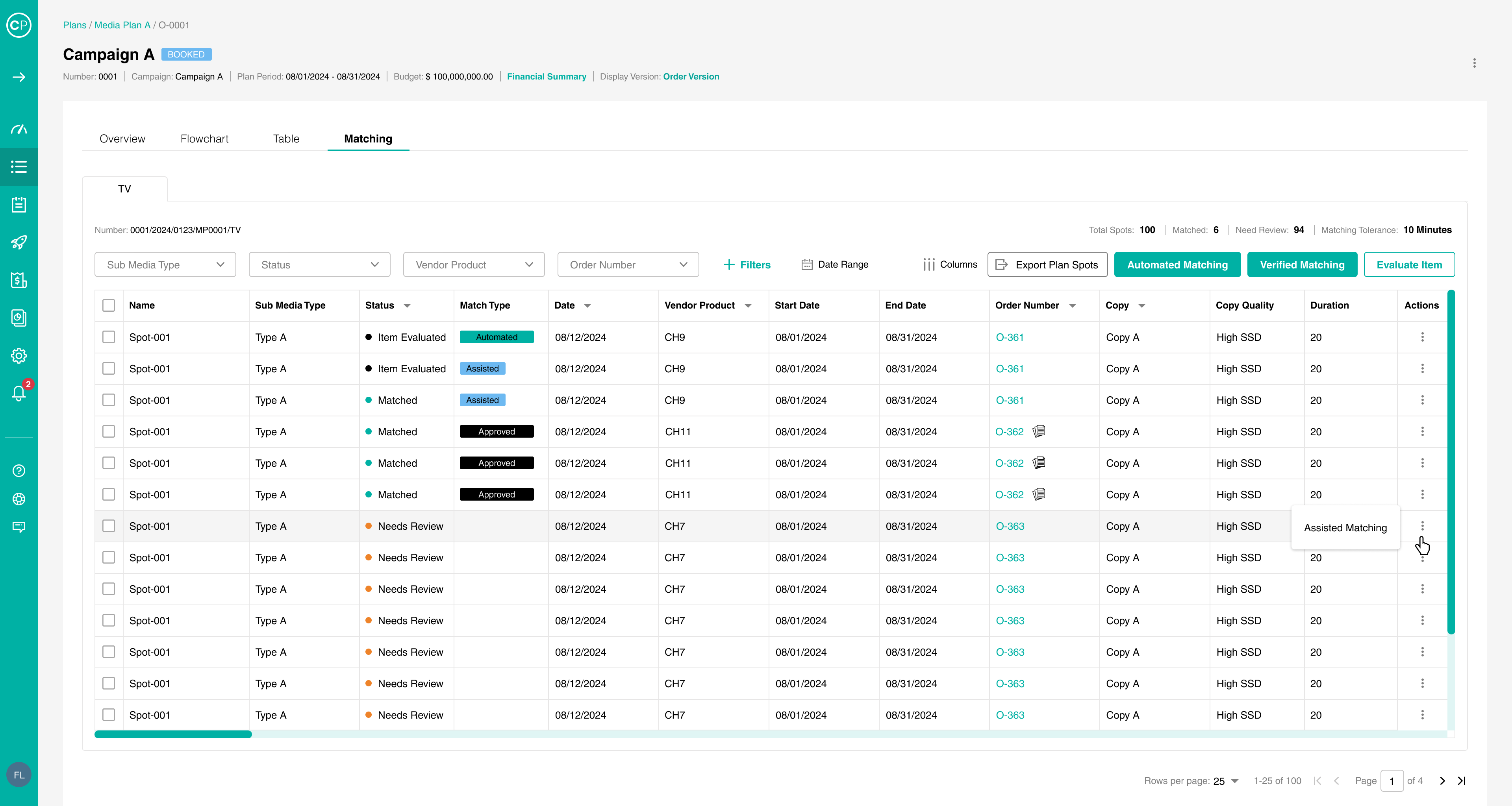
Making complex data states easier to interpret
Some workflows required users to interpret the current condition of information within a larger process.
I focused on making those conditions easier to scan and understand by establishing clearer hierarchy, visual differentiation and interaction patterns.
The objective was to communicate context and state without requiring users to interpret the underlying system logic themselves.
Structuring a complex reporting experience
The reporting experience presented a different form of complexity: users needed flexibility when configuring and retrieving information from large datasets.
The design challenge was to provide that flexibility without making the configuration process feel opaque or unnecessarily difficult to navigate.
I focused on clearer grouping, hierarchy and predictable interaction patterns, helping users understand the relationship between configuration and the resulting information.
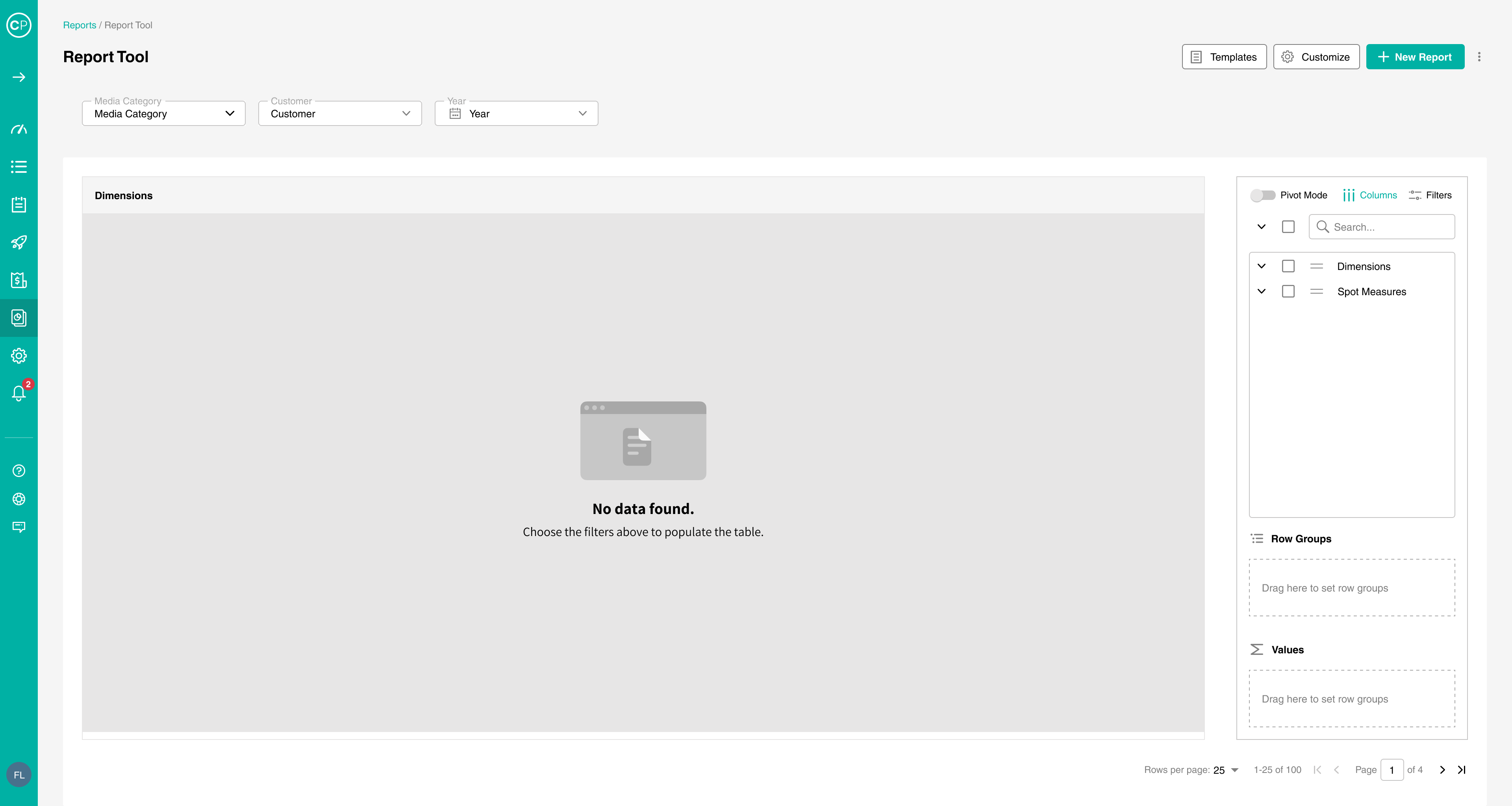
Reporting workspace
Before and after
Before
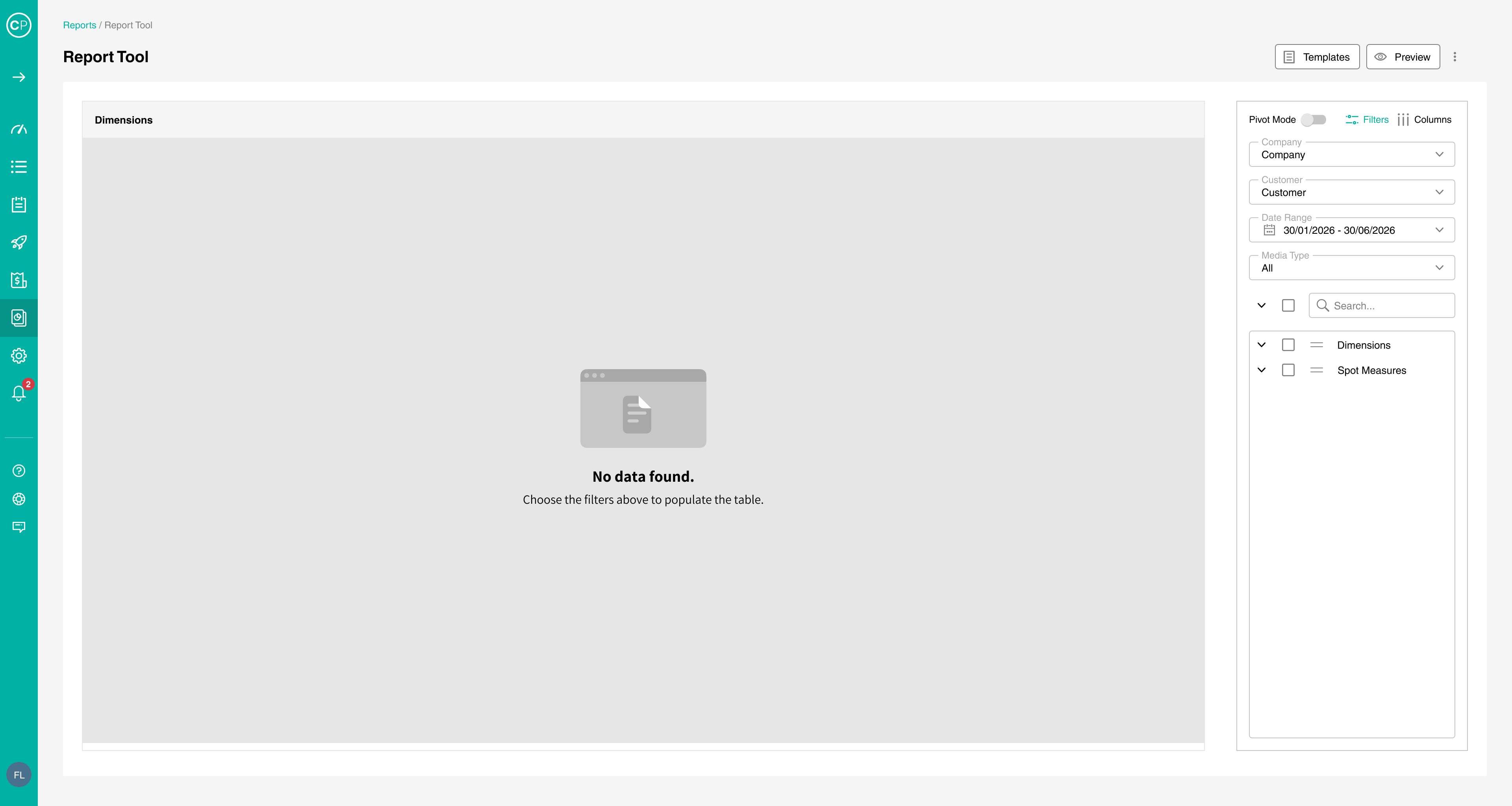
After
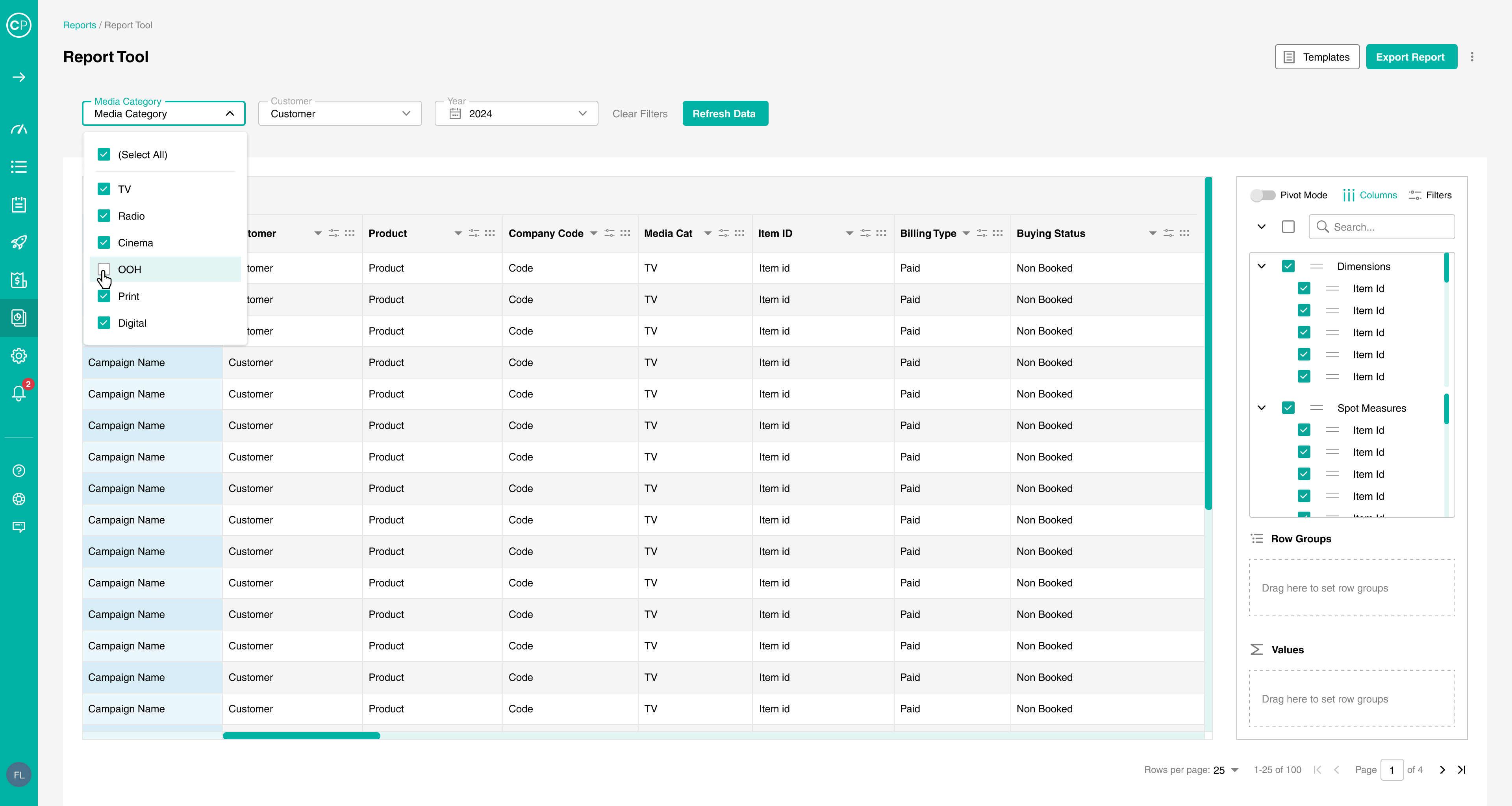
The resulting experience connected configuration with the generated information while making available actions and system states more apparent.
This work also provided an opportunity to refine patterns that could be reused across other data-heavy areas of the platform.
Order workspace
Balancing density, hierarchy and actionability
Another area brought together many of the platform’s challenges in a single interface.
Users needed to work with large amounts of structured information while maintaining an understanding of hierarchy, relationships, states and available actions.
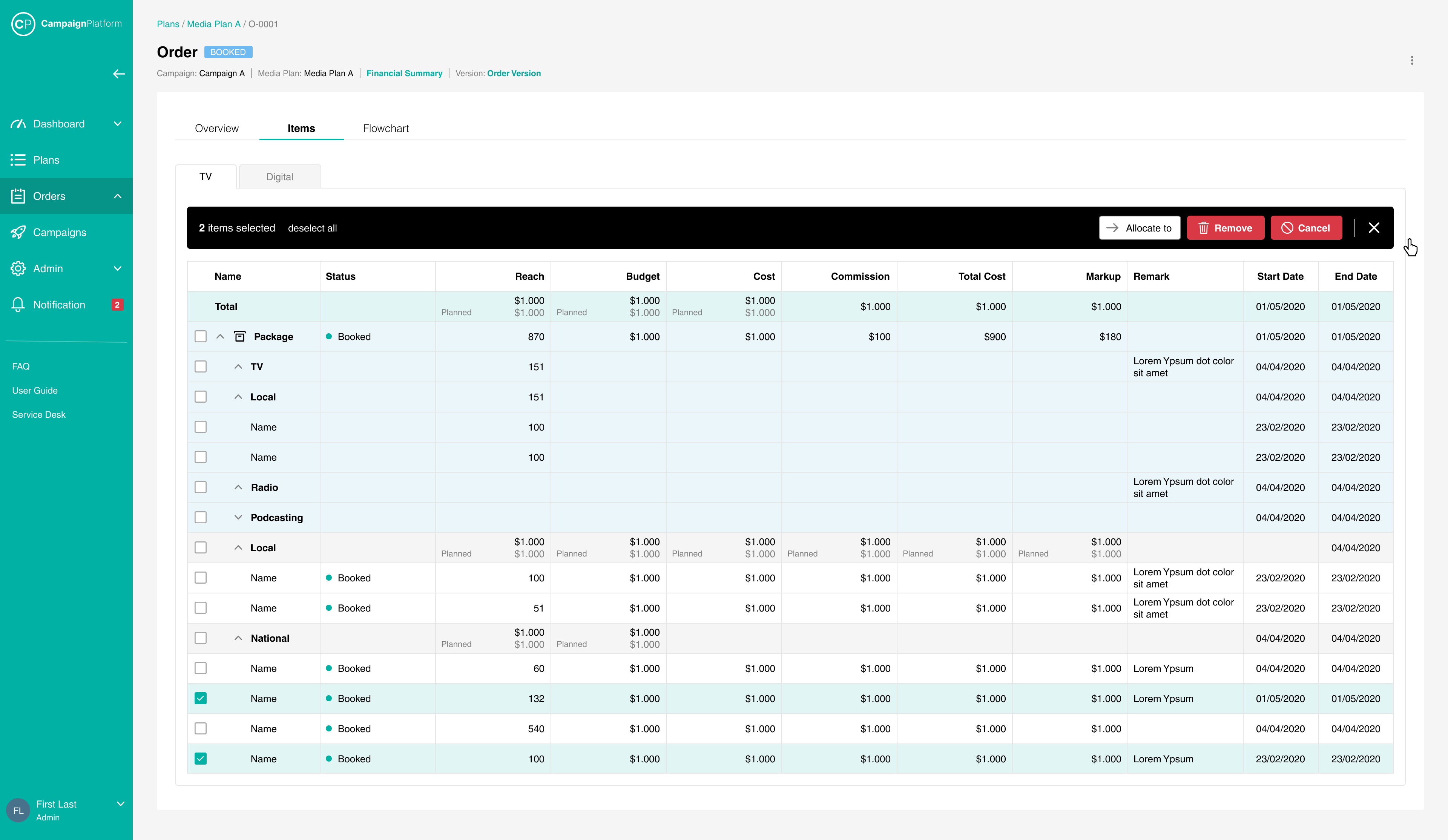
I focused on maintaining the information density required by expert users while improving hierarchy, scanability and visibility of interaction states.
Accessibility
Designing for accessibility
As part of the UI refinement, I explored an alternative visual direction with stronger contrast.
The objective was to investigate how the interface could better align with WCAG AA accessibility guidelines, particularly by increasing visual differentiation between interface elements and states.
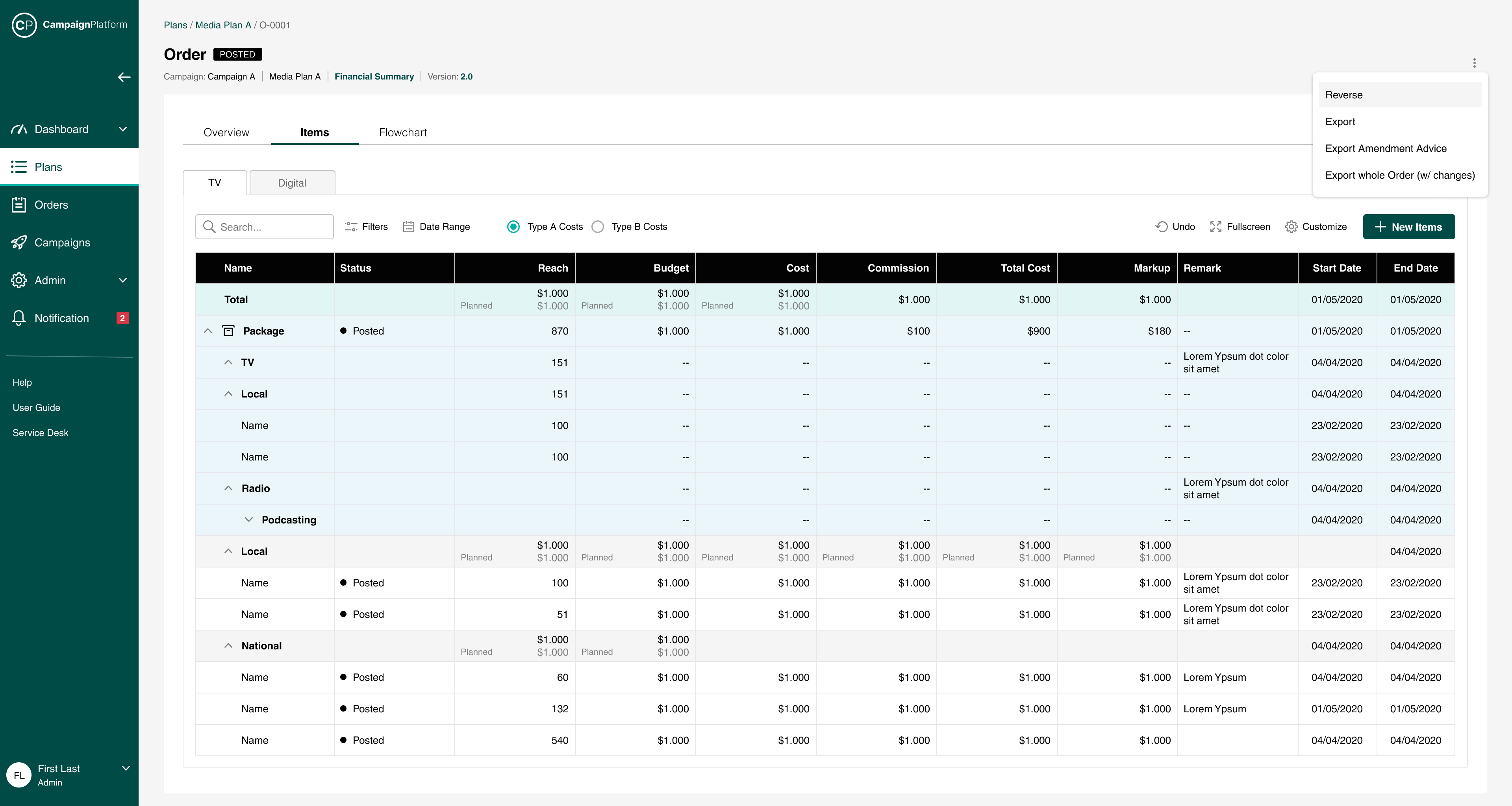
The exploration also fed into the broader Design System work, reinforcing the importance of accessible visual states as reusable patterns rather than isolated screen-level decisions.
A product in transition
Designing for a product in transition
The product’s initial implementation created an important design constraint.
Solutions needed to work for immediate requirements while remaining flexible enough to accommodate broader product evolution.
That meant considering not only the happy path, but also local constraints, edge cases, existing gaps, new requirements, different roles and permissions, and future workflow variations.
The goal was not to predict every future requirement, but to establish patterns flexible enough to evolve with the product.
Implementation
From design to implementation
The work was integrated directly into the product development cycle.
Following design approval, the designs moved into development for implementation.
This close relationship between design and development meant that interaction details, component behavior and edge cases could be reviewed and refined continuously rather than being treated as a one-time handoff.
Outcome
A stronger UX foundation for continued product evolution
The work strengthened the product’s UX foundations as the application evolved beyond its initial context.
Across complex workflows, dense data interfaces, system states and accessibility refinements, I helped establish reusable patterns to support the product’s expanding requirements.
Selected screens and artifacts have been sanitized for confidentiality. Product names, identifiers, data and operational parameters have been modified or replaced; the underlying UX architecture and design approach are represented accurately.